“The Foot Guy” with a Big Heart
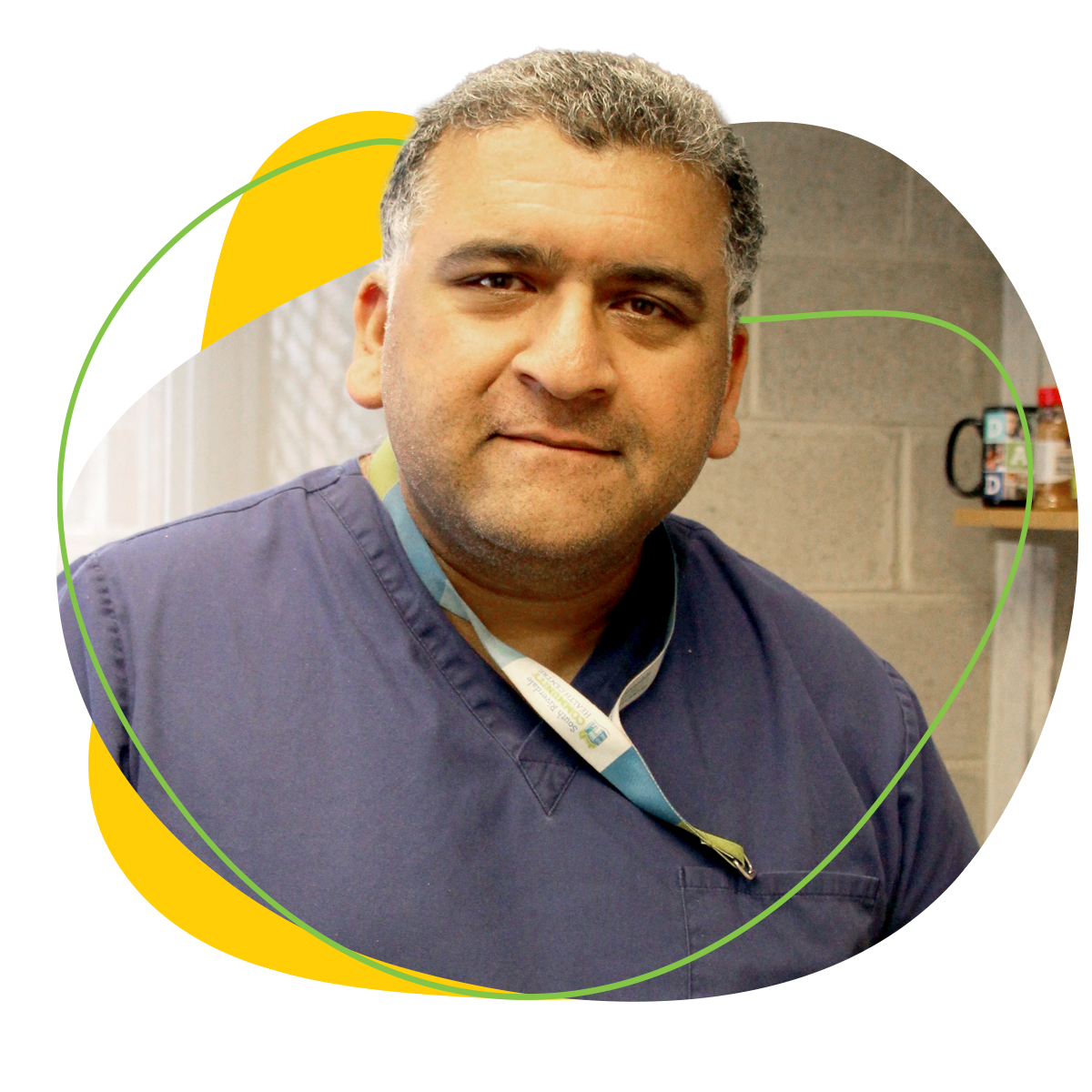
For 4 years, Salman Alam has cared for people’s feet at SRCHC — and, just as importantly, taken the time to know the people behind them.
Tell us a little about yourself and your journey. What first drew you to chiropody, and what brought you to SRCHC?
I’ve been practicing chiropody for 27 years. As a kid, I wanted to be a doctor because I knew I wanted to help people. While I was in university, I met someone in chiropody and it immediately interested me. I haven’t looked back since.
I worked in private practice for 20 years, then I wanted to give back to my community in a different way. A friend told me about SRCHC and how much time staff spend getting to know patients and understanding their lives. That really appealed to me. The more you know about someone, the more you can help.
You meet many different people through your work at SRCHC. What are some important things your patients have taught you over the years?
One patient taught me a lesson I’ll never forget. He had diabetes and lived with many challenges, including deplorable housing, substance use, and mental health issues. His life had been incredibly difficult.
But when I got to know him, I saw so much more. He was intelligent, thoughtful, and resilient. He reminded me that there’s always more to a person’s story than what you see on the surface.
Can you tell us more about the relationships you build with patients?
I often see patients every four to six weeks, so we get to know each other well. They tell me what’s happening in their lives, and I share parts of mine too.
Many call me “the foot guy.” I’ll hear someone call out, “Hey, Mr. Foot Guy!” and it always makes me smile. Those relationships are one of the best parts of my job.
What does foot care mean for people facing complex challenges?
For many of our patients, foot care is about much more than feet. People living with diabetes can lose feeling in their feet and have trouble healing from even small wounds. Without proper care, something minor can become very serious.
Sometimes a simple intervention can make a huge difference. Patients’ faces light up when I fit them with a new pair of shoes. Helping someone in a way they weren’t expecting — that gives me a real buzz.
Community health centres help people who may not always get the care they need. What do you think is most important about the work that SRCHC does?
SRCHC is accessible. When people walk through our doors, they’re greeted by familiar faces and a welcoming environment. It doesn’t feel intimidating or clinical.
We have doctors, nurses, social workers, and many others working together. If someone needs support — whether it’s primary care, mental health support, diabetes care, substance use care, or help navigating life challenges — we’re here for them.
Can you share an example of how that team approach makes a difference?
I remember a patient who told me she was experiencing abuse. Because of the relationships we build here, she felt comfortable sharing that with me.
I was able to connect her with our social worker and other supports. That’s what makes community health care special. We’re not just treating one issue. We’re helping people access the resources they need to move forward.
When you think about the future, what would you like to see for the people and communities that SRCHC serves?
I’d love to see more support for community health centres so they can continue growing and responding to the needs of the people they serve.
Many of our clients have experienced barriers to care or situations where they felt judged or pushed aside. We work hard to meet people where they are and provide compassionate care. Everyone deserves that.
Looking ahead to the next 50 years, what do you dream for SRCHC?
My dream is that more people see the value of places like SRCHC. The care provided here is exceptional because it’s built on trust, compassion, and genuine relationships.
If you’ve never been inside a community health centre, I would encourage you to visit one. You’ll find caring people who are deeply committed to their communities.
To me, this is a blueprint for better health care. We treat people with dignity, we work together, and we lead with humanity. That’s what gives me hope for the future.