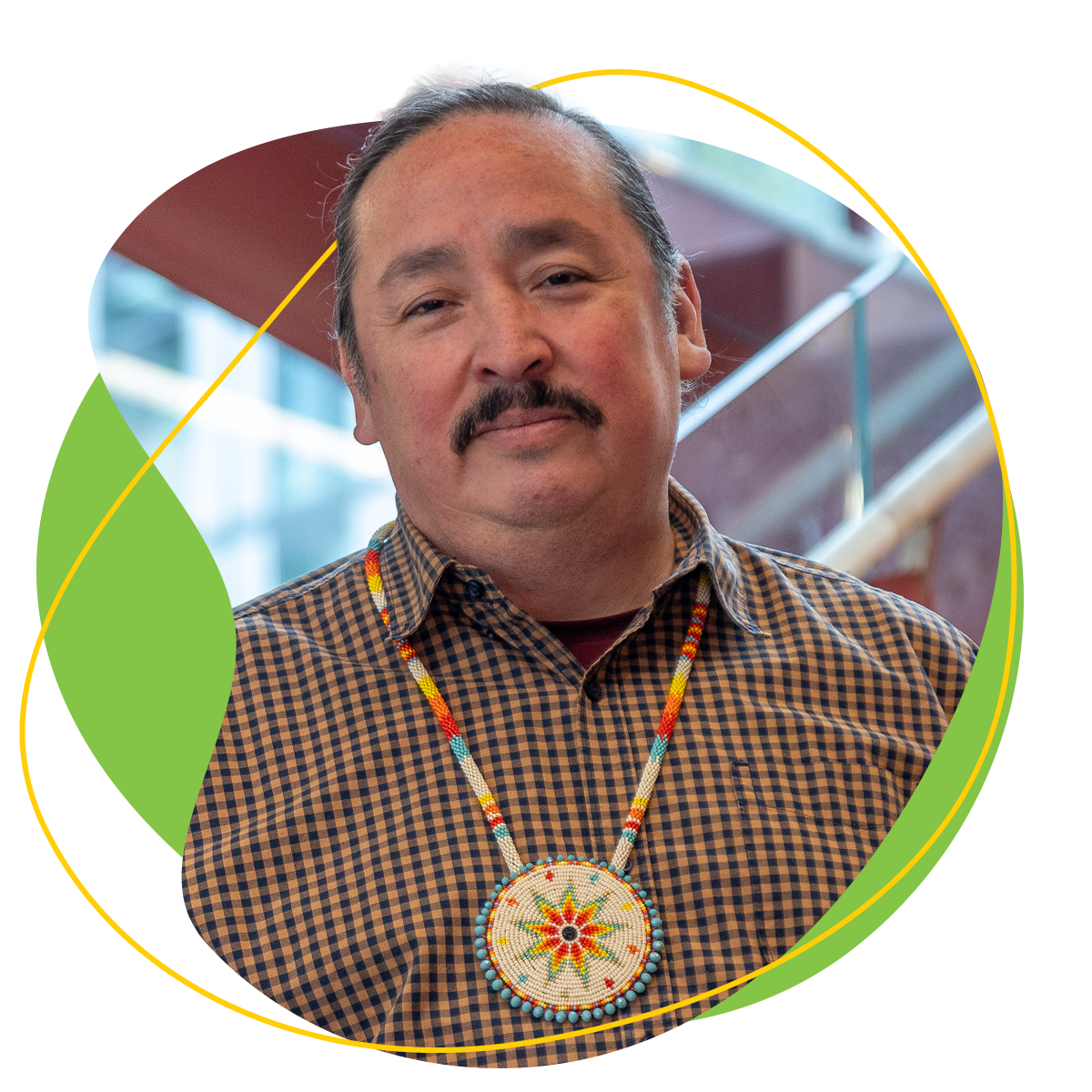
A community leader weaving together Indigenous Traditional healing practices and Western model of health care to support urban Indigenous people
Executive Director, Anishnawbe Health Toronto
Can you share a bit about your personal journey and how your path came to intersect with SRCHC? What has that relationship meant to you — both professionally and personally?
I moved from Calgary to Toronto eleven years ago with my husband. It was a hard transition — leaving family and community behind. We weren’t sure at first if we made the right choice, but looking back, we know we did.
My path into health care began at CAMH, where I learned from strong Indigenous leaders who still guide me today. Eventually, I joined Anishnawbe Health Toronto (AHT).
Through a colleague at CAMH, I also joined SRCHC’s Board. That experience — and even being a client myself — deepened my understanding of care, community, and leadership. It’s been part of my journey to becoming Executive Director at AHT.
How has AHT’s partnership with SRCHC supported its model of care, and what does meaningful collaboration look like?
We call it a circle of care at AHT — bringing together Traditional healing and Western medicine to support urban Indigenous clients. Everyone sits at the table (our Traditional Healers and clinicians), and we build an integrated care plan together with our clients.
Our partnership with SRCHC helps us reach Indigenous people in East Toronto, including through their Moss Park Consumption and Treatment Services (CTS) site. A large portion of the people they serve there are Indigenous, which is why they invited us to bring our mobile Rapid Access Addiction Medicine (RAAM) clinic into that space. We offer rapid, low-barrier care — medication, support, and counselling without long waits.
That connection has helped Indigenous clients move into ongoing, culturally grounded care with us, and allows us to better support shared clients together.
With the CTS funding cuts, we are deeply worried. These services save lives — especially for urban Indigenous people who already face so many barriers to care. Without them, people will be pushed back into isolation and life-threatening situations. We will lose people. We are doing everything we can to expand RAAM and respond, but there is no true replacement for what is being taken away.
Where do you see opportunities to deepen your partnership with SRCHC?
Right now, we are focused on expanding our RAAM services to respond to urgent needs in the community.
We want to continue bringing our mobile clinic to SRCHC sites, including its East Toronto HART Hub, plus explore a dedicated physical space for this work. Even as services change, we are committed to showing up for the people who rely on us.
As we look toward the next 50 years, what are your hopes for SRCHC?
I hope to see a deepened commitment to reconciliation — work we do together, in a real and meaningful way.
At Anishnawbe Health, healing includes reconnecting with culture, identity, and tradition. Ceremony and traditional healing are essential parts of care.
When Indigenous people are supported to find themselves again, it changes their health and their future. I would love to see approaches like that for Indigenous clients at SRCHC.
From your perspective, what makes this relationship valuable for the communities you serve?
Our clients travel from across the GTA to access care. AHT’s vision is to build a network of culturally grounded primary care sites closer to where people live.
Partnerships like the one with SRCHC make that possible. They help extend our care, strengthen connections, and support better outcomes for urban Indigenous communities.
I value SRCHC’s leadership — people willing to listen, learn, and push boundaries to do what’s right. Working together, we can create better paths to care for the people who need it most.