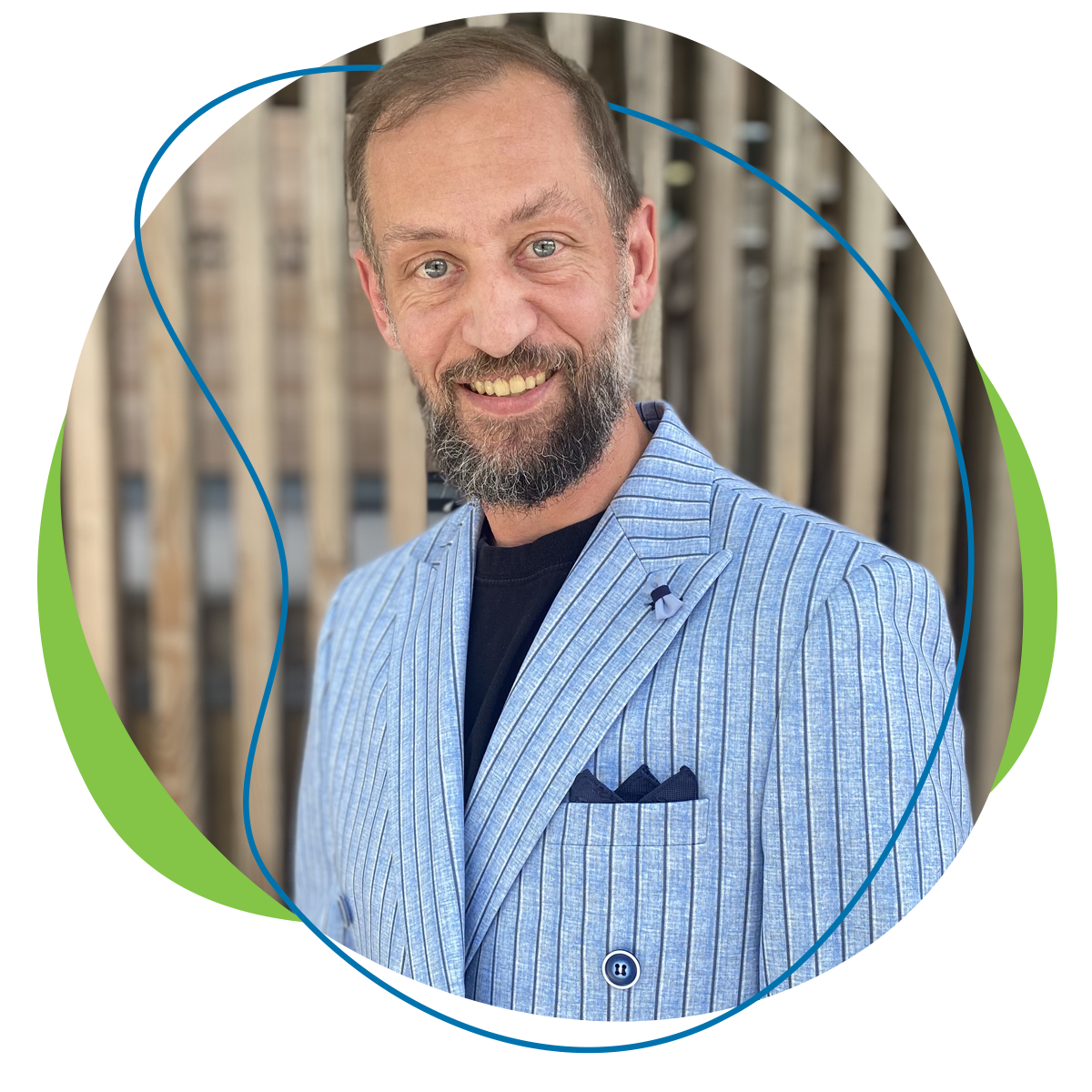
From surviving to speaking up: after SRCHC helped save his life, he is now using his lived experience to help others find a way forward.
When you first walked through SRCHC’s doors, what do you remember?
I was very broken. I was homeless and dealing with addiction, mental health challenges, and physical health problems. I didn’t feel like I was worth saving. I didn’t see a way back for me.
But SRCHC treated me with compassion. The staff would say hi to me each time I showed up. It was almost like a celebration that I had survived the night and was back.
They were also there when I tried to take my own life. And they were there when I tried to get better and failed. They never judged me.
What did that support mean to you?
It saved my life.
They would say, “Maybe the next time will work.” Or, “If you’re using today, we’re still here for you.” And, “If you want to try treatment, we’re here for you.”
That meant the world to me. I had felt like no one gave a damn.
All those little interactions planted the seeds that I was worth saving. That kept me alive long enough to keep going and keep trying.
They celebrated me get housing. Many of them even came to celebrate my first year of sobriety. I will never be able to thank them enough.
Was there a moment when you began to imagine your life could be different?
There were these lightning-bolt moments when something positive would happen amidst all the trauma.
One that really stands out was a conversation with a staff member at SRCHC, two days after I had a major overdose. I was crying and very upset. I didn’t want to do this anymore.
I told her that one day I wanted the world to know my story so I could help other people.
And now that is exactly what I’m doing.
You’ve lived through many different chapters. What do you understand now that you didn’t then?
I realize how lucky I am to still be here, and how important it was to encounter the right people at the right moments.
As I got a little better, my housing became more stable. I then started looking for ways to get involved in my community. I said yes to every opportunity, and one opportunity led to another.
I realized the value of my story and my vision. I get to share it with other people. I didn’t realize how healing that would be.
What have you learned about what people need to move forward?
Sobriety is not enough.
You need to find a way to have meaning and feel connected. You need connection to someone and something beyond just your survival. That is crucial to moving into stability and keeping it.
And it starts with having a home. You can’t fix anything else until you can fix that.
I see now that I went through what I did for a reason. I want to use that experience to help prevent other people from going where I went.
What led you to become an advocate?
It started with me going to a community meeting. I went on my own because I was looking for a way to connect with my community.
It was my first time speaking publicly about my lived experience with addiction, homelessness, and my past involvement with the criminal justice system.
My MP, MPP and City Councillor were there. I spoke about where I am now and the challenges I had faced.
Afterwards, I met a documentary filmmaker, and now I’m appearing in a movie about homelessness and addiction. I’ve also started speaking with elected officials outside of Ontario and their staff.
One opportunity has led to another.
What do you hope changes in Toronto over the next 10, 20, or 50 years?
My ultimate hope is that no one has to face homelessness or choose between paying their bills and eating that day.
There’s a feeling that if we can get someone into detox or treatment, that’s enough. But what happens when they leave? Without housing and the right supports, people can relapse and end up back in the criminal justice system, starting the cycle all over again.
We need to look at the whole picture. Housing has to be a priority. Once people are stable and have a home, they have a much better chance of working on everything else.
Everybody deserves a home and a chance to get better.
Why is harm reduction still so important to you?
Because not everyone is ready for abstinence. We can’t leave half the population behind.
The consumption and treatment services sites weren’t a free-for-all to do drugs. They were places where people could stay alive and get help with housing, detox, counselling, treatment, and other supports.
They understood that someone might be homeless, dealing with physical and mental health challenges, and using drugs to cope with what they were facing.
Consumption and treatment services kept people alive, and some long enough to hopefully get out of that situation and move on.
I’m alive because SRCHC kept me alive long enough to get here. I worry about the people who don’t have that missing piece today.
Where are you in your life now?
I’m almost three years clean and sober. I have my housing. I have my supports. I have a family doctor and access to the specialists I need.
I’m in a stable place. I’m working part-time and I’m involved in my community.
I recently finished high school and got my diploma, which was a huge accomplishment.
I still have a long way to go, but I’m very lucky I found my way back.
What are you dreaming forward to for yourself?
I want my body and mind to allow me to work full-time without consequences.
But I also want to keep helping people. I hope other people who are living in that constant state of crisis that I lived in can know there is a way out.
I want governments at all levels to come together to make that possible.
We need lots of pathways to help people find their way back and have a life of meaning.
And what are you dreaming forward to for others?
I want people to have a home, support, and a chance to find meaning in their lives.
Community health centres are constantly being asked to support us with less money and fewer people. My heart goes out to them for what they do and how they do it.
I’m here because people at SRCHC didn’t give up on me.
Now I want to make sure other people have someone who says, “We’re still here for you.”
That’s what dreaming forward means to me.