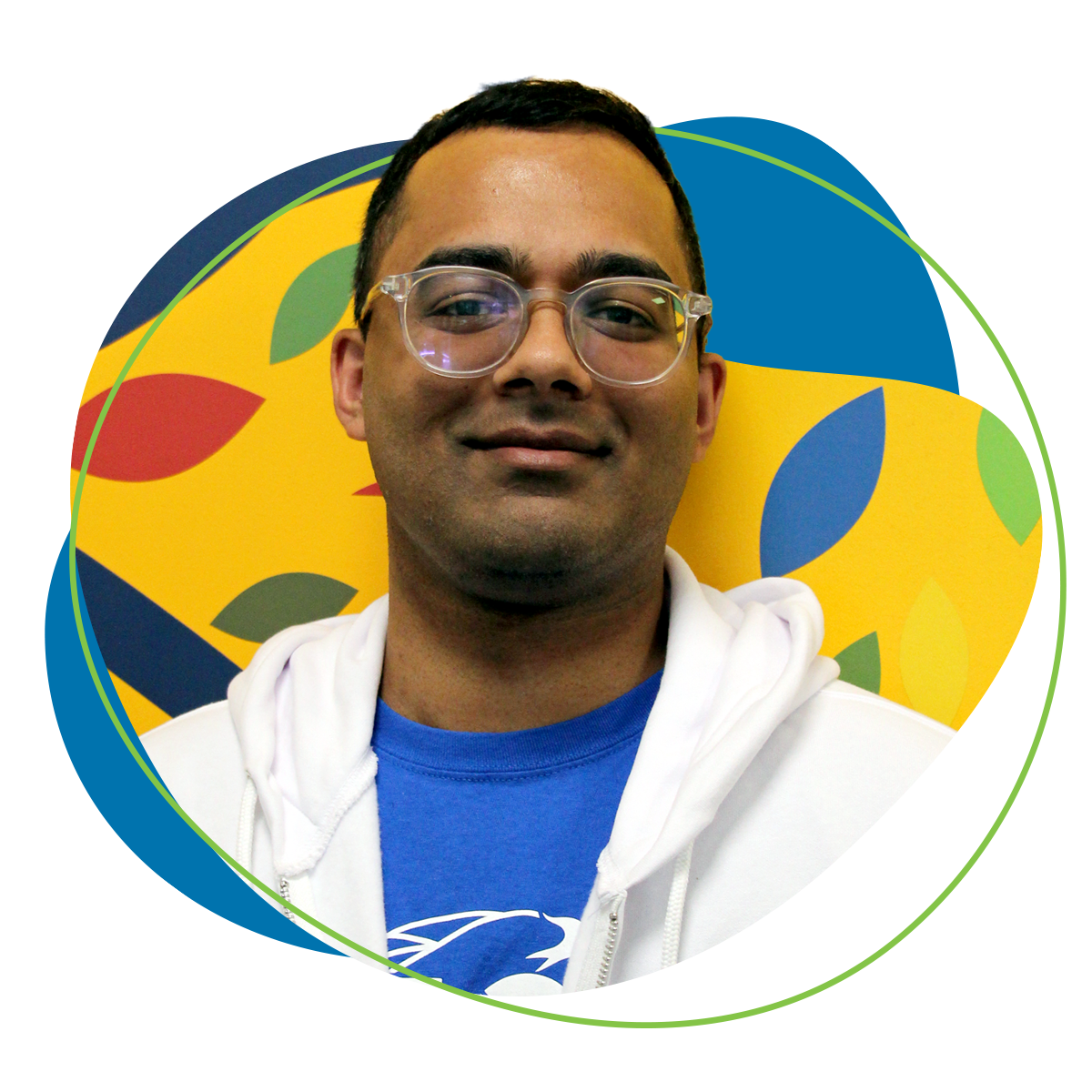
For nearly six years, Niza has helped keep SRCHC’s technology running behind the scenes — so staff can focus on providing care, support, and connection to the people who need it most.
When you first joined SRCHC, what was it about the organization — or its mission — that made you feel this was where you wanted to build your work and contribute your skills?
Before joining SRCHC, I worked at reBOOT Canada managing a national program that provided people with low incomes with refurbished computers to access technology they otherwise could not afford, enabling them to apply for jobs or participate in school. Moreover, I had also spent time working with the sexual health team at York University and that experience introduced me to the social determinants of health and barriers in receiving care.
When I learned more about SRCHC’s work, it felt like a place where I could use my technical skills, professional connections, and past experiences to support something meaningful. I joined during COVID, when many staff were suddenly working remotely, and technology became essential to helping people stay connected to care and services.
People often think of IT as happening behind the scenes, but at an organization like this, technology can directly affect care, access, and dignity. Can you share a moment when you realized the impact of your work extended beyond technology?
One moment that stands out was helping a homeless client whose cellphone wasn’t receiving calls. It meant they couldn’t receive appointment reminders, application responses for housing opportunities, or other important communication from their care provider.
It may seem like a small issue, but access to information is critical when you need care or are trying to apply for government support. Solving that problem reminded me that technology isn’t just about devices or systems — it can have a real impact on someone’s ability to receive support.
Was there another experience that reinforced that connection for you?
I remember an initiative where clients received cellphones to help them access programs and services or connect with their family and loved ones. This is especially important when a client is homeless, as they may not have another phone number where they can be reached, nor a home address where they can receive mail. Often, their family members and loved ones do not know where they are either, meaning the only way to try and locate them is by searching encampments or calling hospitals and prisons. It really highlighted for me the ways in which SRCHC reduces barriers and helps people access care.
Something as simple as having a reliable way to connect became a game changer. It reinforced for me that when people have access to basic technology, SRCHC staff can support people better, and that can improve someone’s ability to receive care.
What keeps you motivated in your role?
A lot of my work involves solving day-to-day IT challenges and helping staff get what they need to do their jobs. It can be complicated, especially as the organization grows, but our capacity to support staff is stagnant due to core funding constraints.
What keeps me going is the sense of care I have for the staff that I support, which translates into better help for our clients in need. Seeing that impact, even indirectly, is rewarding.
When you think about the next 50 years, and as you Dream Forward, what do you hope technology — and the people behind it — can help make possible for SRCHC and the people it serves?
My hope is that technology can help the organization run smoothly behind the scenes while also creating opportunities for new and innovative ways to deliver care.
I’d love to see more investment in technology support and innovation. There are so many great ideas across the organization — from new tools that could improve care to better ways of connecting people with services — but it takes capacity to explore and implement them.
If we can continue strengthening the foundation while creating space to innovate, I think technology can play an even bigger role in helping people access the care, support, housing, and services they need.
What does it mean to be part of SRCHC’s story?
It means a lot to be part of an organization where people care deeply about the work and about each other.
When I received my five-year service certificate, the loud applause from my colleagues was unexpected and meaningful. It reminded me that even though IT often happens behind the scenes, we’re all working toward the same goal: helping people feel heard, supported, connected, and cared for.