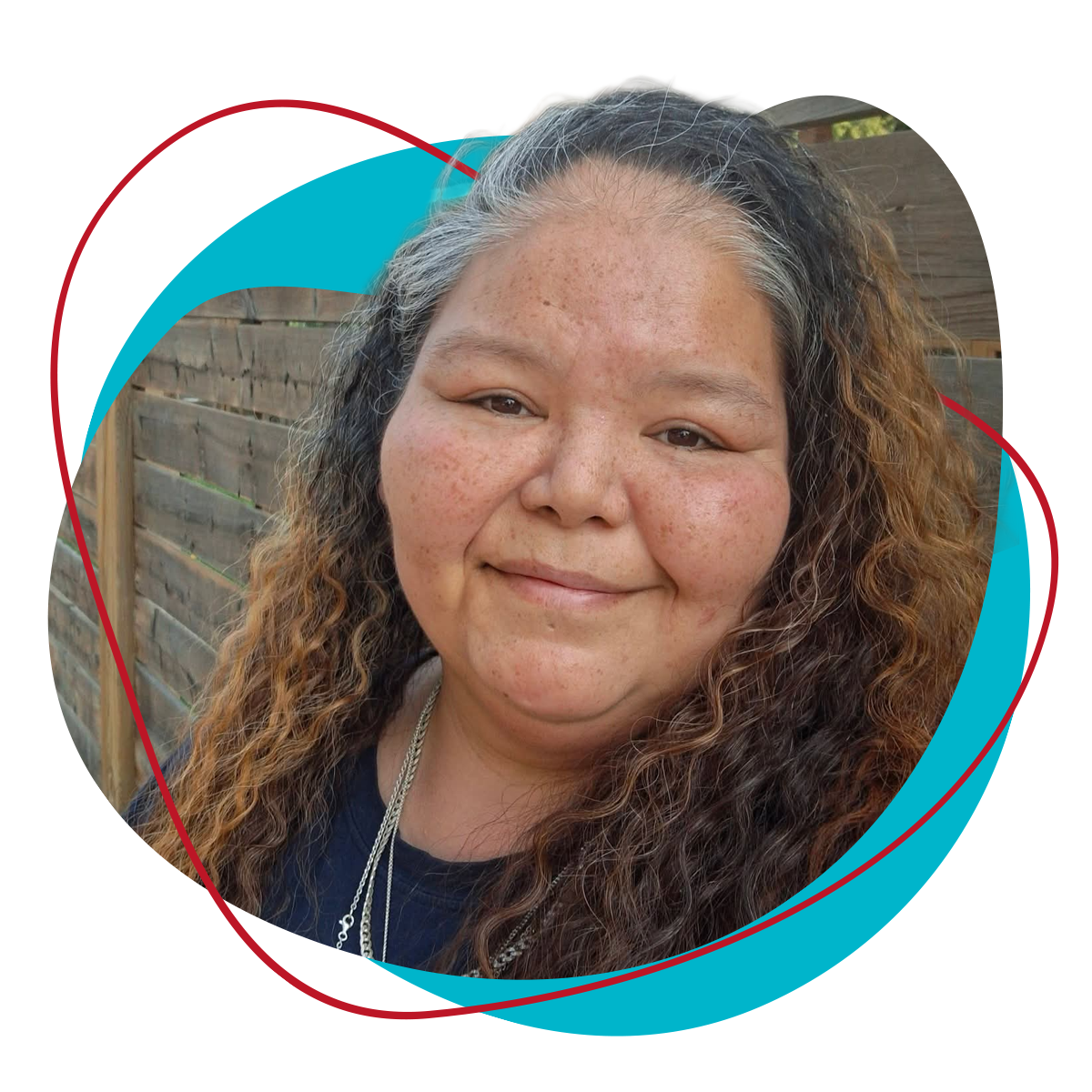
A mother, beader, and community member who found support, connection, and healing through SRCHC.
Looking back over your journey with SRCHC, what first brought you here — and what has inspired you to remain part of this community over the years?
I first connected with SRCHC around 2012, when I was struggling with addiction. Two community health workers really helped me during that time. They were there when I needed someone to talk to, and they helped me get connected to a doctor.
When I was ready to get sober, SRCHC helped me get on Suboxone. I’ve stayed on it ever since. SRCHC became a safe place for me. If I was struggling, hungry, upset, or needed support, there was always someone there for me. I honestly don’t know where I would be without them.
As someone who has experienced SRCHC over many years, how would you describe the role it has played in your life and in the community?
SRCHC has been a big part of my life for almost 15 years. My three kids go there too for their primary health care. They’re 20, 19, and 18 now.
I used to go to the women’s breakfasts and drop-ins. Those programs helped me feel connected and less alone. I’d like to get involved again because I’m still on my sobriety journey, and those spaces really helped me.
Can you share a little about your beading and what it means to you?
I started beading after I got sober. It helped keep my mind busy when I was having cravings, and it helped me focus. It relaxes me too.
My business is called Cedar Woman Traditional Crafts. People message me for custom work, and most of my orders come through word of mouth. Right now, I’m working on a medallion for my cousin. Last year I made eight graduation caps for an order going to Sudbury.
Beading connects me to my culture. My grandma used to bead too. I didn’t know that until my father told me.
What are some moments or connections at SRCHC that have stayed with you over the years?
One of the community health workers I met there changed my life. I’ll never forget her. She was always there for me when I was struggling.
I also loved the women’s drop-in circle. We would talk, laugh, support each other, and do things together like nails or hair. It made me feel good to be around other women who understood what I was going through. I didn’t feel so lost there.
What did it mean to take part in SRCHC’s Truth and Reconciliation event?
That day meant a lot to me. I had a booth where I shared my beadwork, and it felt really meaningful to be part of the event in that way. People stopped by to talk with me, and I had the chance to meet and connect with new people throughout the day.
I felt proud to share my work and my culture, and to contribute in honouring Truth and Reconciliation. Moments like this also remind me how important it is for all of us to keep learning, listening, and continuing that journey together — not just on one day, but in our ongoing relationships and understanding.
As SRCHC looks ahead and continues “Dreaming Forward,” what are your hopes for the future?
I hope they can keep creating more safe spaces for women and men, as well as Indigenous communities who are looking for traditional and cultural supports. Places where people can drop in, talk to an Elder, do crafts, share food, or just feel connected. Those kinds of programs really matter.
I was sad when funding was lost for their Consumption and Treatment Services sites for people who use drugs. People need places where someone is looking out for them. Without those supports, people can fall through the cracks.
I hope SRCHC can keep being a safe place for people, the same way it was for me.