

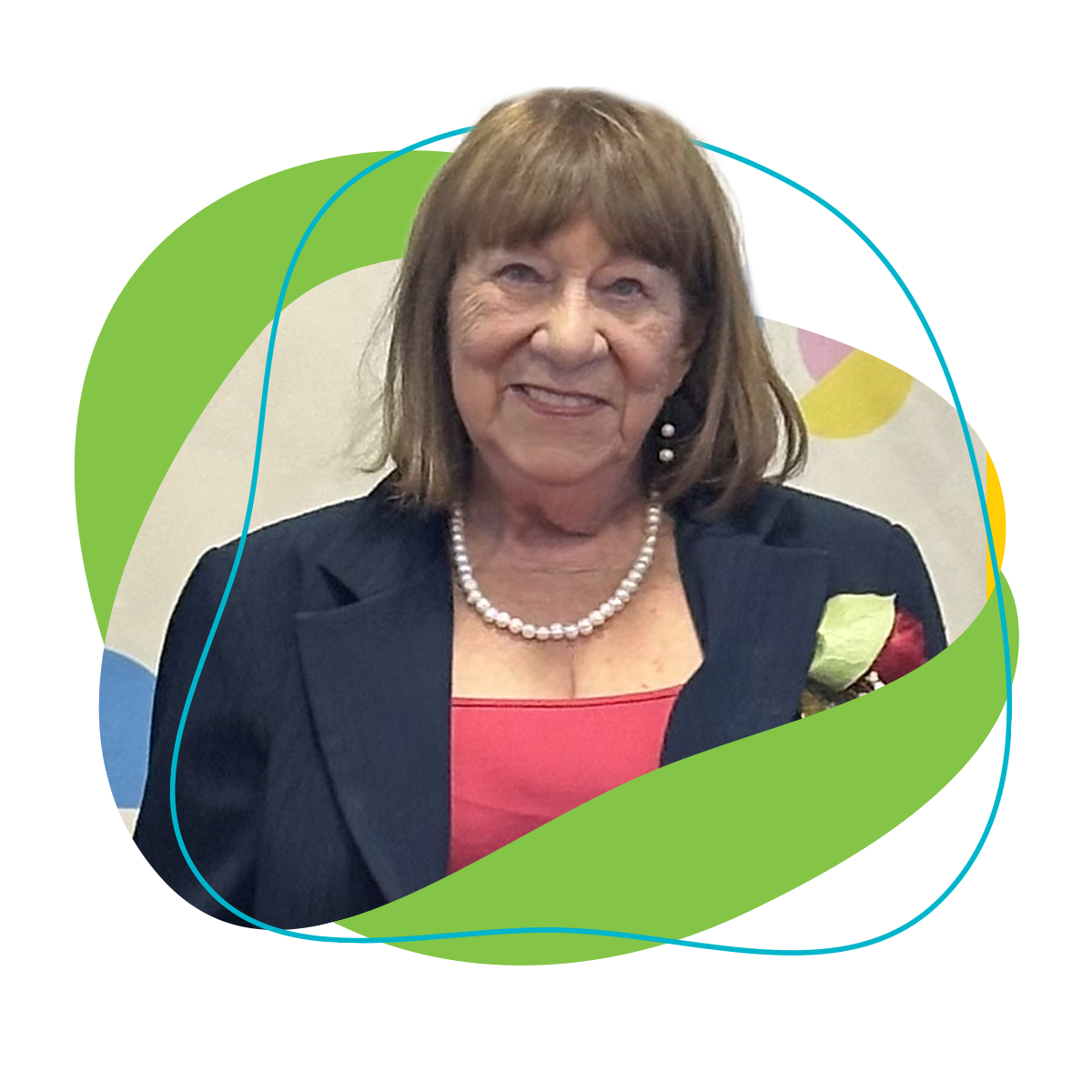
Registered nurse and certified diabetes educator (RN and CDE), who helped build DECNET and bring diabetes education into the community.
You’ve spent more than five decades caring for people. How did your journey with SRCHC begin?
It began in the early 2000s, when I was a nurse at Toronto East General Hospital, now Michael Garron Hospital. I was part of a multidisciplinary team providing diabetes education through our outpatient clinics. We had nurses, a social worker, dietitian, endocrinologists and others, and we all believed that education could help people living with diabetes avoid long-term complications.
Then the government put out a call for proposals to reach 1,000 people a year through a community-based program. We began talking with SRCHC and East End Community Health Centre, and a three-way partnership was born.
What was different about bringing diabetes education into the community?
We took the program to where people were, instead of asking them to come to the hospital.
We offered classes at SRCHC, East End CHC and a site across from the hospital. Then we went into apartment buildings, community spaces, and neighbourhoods — St. Jamestown, Malvern, and Providence Centre.
We also offered programs in Chinese, Urdu and Tamil, and had a community kitchen at SRCHC.
It was a big idea at the time: take healthcare out into the community and make it easier for people to access.
You helped create DECNET. What was behind the name and the idea?
DECNET stands for Diabetes Education Community Network of East Toronto, but we also thought of it as a fishing net. We were casting a wide net to reach 1,000 people.
We used a water theme throughout the program — sail boats, life jackets, fish, “smooth sailing” and “survivor skills.” It made the program feel welcoming and gave people a sense that they were learning the skills they needed to navigate life with diabetes.
What did you learn from DECNET about what’s possible when healthcare and community come together?
It was very rewarding. People came, they enjoyed the program, and many came back for more. They felt they were getting something out of it.
Working with the community health centres also meant we could be nimbler and more creative. We weren’t as constrained as we were in the hospital.
Most importantly, the program was about self-management. We wanted to give people the tools, independence, motivation, and confidence to take care of themselves and access the care they needed.
You’ve seen how the place where care happens can change how people experience healthcare. What do you hope SRCHC never loses sight of?
I hope SRCHC continues to make healthcare feel warm and welcoming, with compassion and respect for every person.
When you walk into SRCHC, it feels different from walking into a hospital. It can feel homey and less formal, while still being very professional.
For people who may feel nervous about going to a hospital or worried about stigma, a community health centre can reduce that stress. People don’t feel as intimidated.
Looking ahead, what do you hope SRCHC continues to dream about and do for the community?
I hope they keep a strong focus on diabetes education. There is still so much need, including for foot care. People don’t always know where to go for help, and foot infections can become very serious and debilitating.
And more broadly, I hope SRCHC keeps looking for ways to help people who are living on the margins get the care they need — and gives them the knowledge and confidence to take charge of their own health.
If you could offer one piece of wisdom to the people carrying SRCHC forward for the next 50 years, what would you want them never to lose sight of?
Keep doing the important work you are doing, helping people access healthcare in ways where they feel welcomed, respected, and cared for. And helping the people doing this work feel valued, too. Community health professionals are highly skilled and doing incredibly important work.
That’s how we keep the dream going: by making sure there is care for the people who need it, and support for the people who provide it.