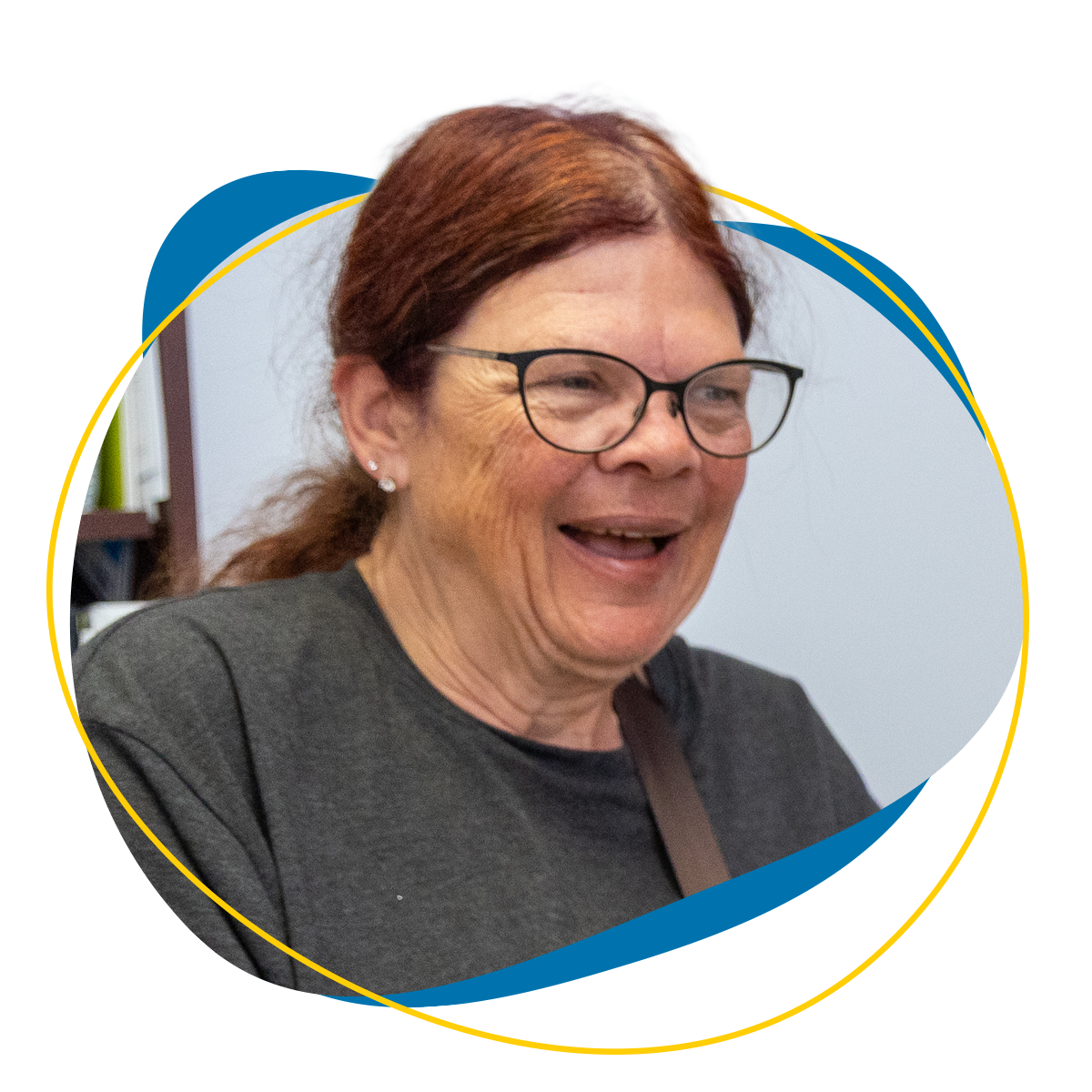
After 15 years with SRCHC, Kathy has found more than diabetes care: she has found people, support, new skills, and a place where she feels welcome.
How did you first find your way to SRCHC?
I saw a flyer in my family doctor’s office. I had already had diabetes for five or six years, but I didn’t really know much about it.
The program offered a nurse, a dietitian, activities, and a peer support group. I thought I would give it a try. That was 15 years ago.
What was it like learning to live with diabetes?
I grew up in an Eastern European household, so we ate a lot of meat and potatoes. It was hard to balance that with diabetes.
At SRCHC, I learned about nutrition and how to cook different things. I had hardly ever made anything vegetarian before. They also talked about exercise.
What has made the biggest difference?
Meeting other people who have the same challenges.
We have group discussions and share our experiences. I try to go to the monthly support group, and there is also a Zoom call. It helps me not feel so isolated.
I’ve made friends there, and I keep coming back because it’s somewhere to go. I also know I’m getting good care.
Has SRCHC become about more than diabetes care for you?
Definitely.
I’ve taken workshops like mindfulness in clay. That was seven weeks of making things with clay, and it was fun. Some local nuns came to do glass painting.
There was also a garden program at Harmony Hall. We planted things, weeded, and looked after the garden beds. Some of the beds were planted by public school kids.
It gives me something fun to do, and I get to be around people.
What does your care look like?
I see a nurse, a dietitian, and a social worker at SRCHC’s Danforth location.
My nurse checks my feet and talks to me about my medication. I have a big problem with taking pills. Sometimes I get frustrated and temporarily stop taking them.
But I keep coming back. The staff are helpful, welcoming, and really friendly.
The social worker also helps me with things beyond diabetes, like referrals and paperwork. She helped me with the multi-page form for Wheel-Trans. That kind of help makes a big difference.
You were also part of SRCHC’s Diabetes in the Real-World Committee. What did that mean to you?
It was an advocacy group. We wanted to get information out into the community and let people know that SRCHC was there to help.
We did community meals and events. We had nurses and dietitians there to answer questions and gave people information about diabetes.
One event I remember was with the Good Food Market. We made black bean brownies and even cooked bitter melon with meatloaf. People who had never tried bitter melon came back for more!
It was a lot of fun.
Why was that kind of community education important to you?
A lot of people don’t feel well but don’t know why. Or they have diabetes in their family but don’t know what they should be doing about it.
Diabetes wasn’t talked about in my family. My grandmother died from it. We knew she died, but we didn’t know much about what had happened. Her feet had turned black. My mother had diabetes too, but she never talked about it.
So I think it’s important for people to have information and know where to go for help.
What would you tell someone walking through SRCHC’s doors for the first time?
I would tell them to come in.
They don’t have to pay for anything. You can get medical care, but you can also meet people, learn things, and try new activities.
The people at SRCHC do their best to tell you what is real and what isn’t, based on what they know. They are welcoming and helpful.
Now imagine it’s 2076 and SRCHC is celebrating its 100th anniversary. What do you hope the next 50 years bring?
I hope there is a lot more education about diabetes, in all kinds of communities — Asian, South Asian, and others.
I wish people had talked about diabetes when I was growing up. I think we need to make sure people know the signs and know where to go for help.
And I hope SRCHC is still here 50 years from now, helping people like me.