
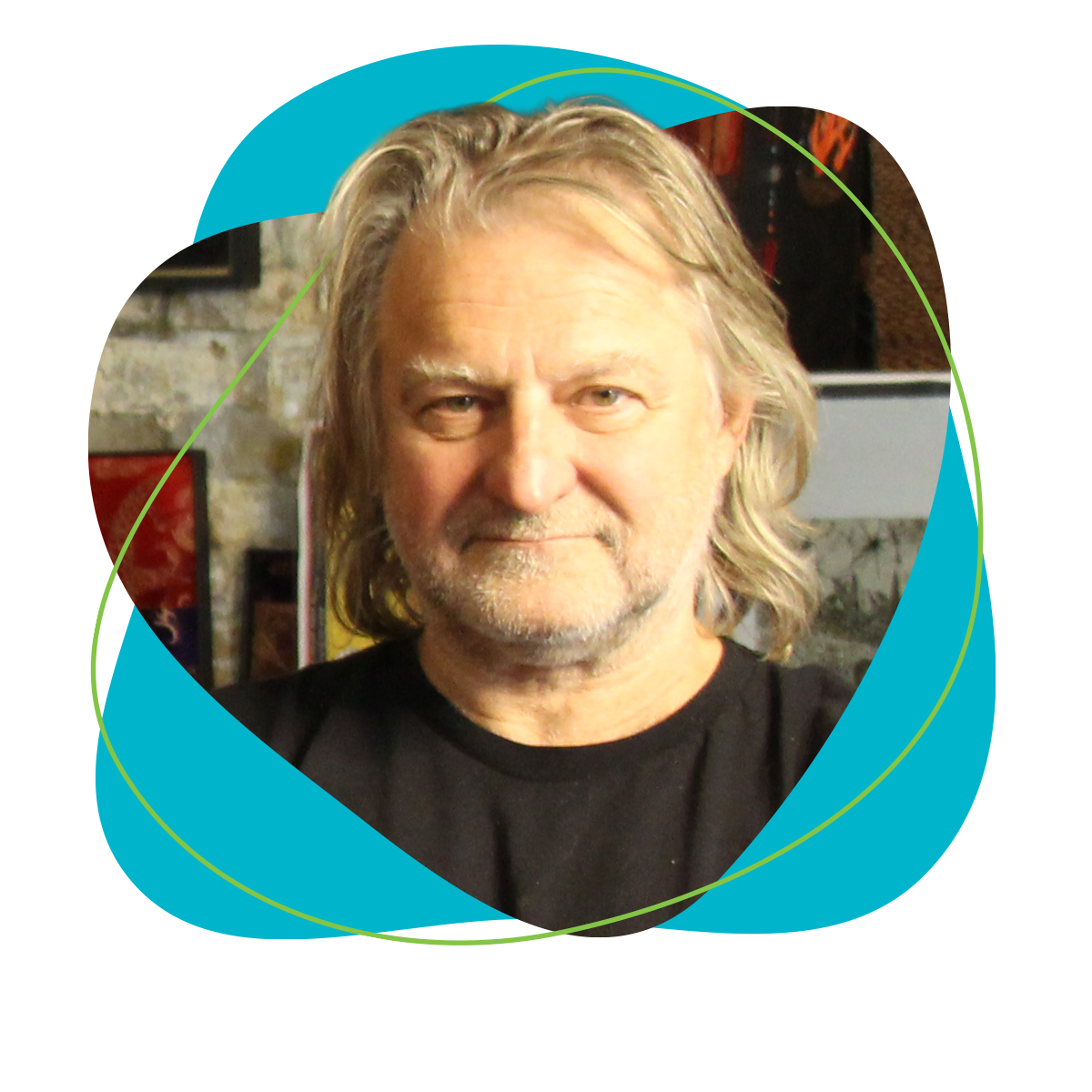
Rocky Dobey is a Toronto artist whose work uses art to bring attention to social issues, honour people’s stories, and advocate for change.
Tell us about yourself and your journey. What first drew you to art, and when did you realize it was something you wanted to dedicate your life to?
I’ve been through many stages in my life, from being a shoeshine boy when I was young to joining a union and working in construction. When I was 12, I started doing street art anonymously all over the city. It was the late 1960s. I would put up little plaques and books on public posts and in the streets. I didn’t think of it as art then. It was just something fun and exciting to do.
In the 1980s, I began creating political art, making big banners and putting them on abandoned buildings. I worked with political collectives on issues like racism and prison justice.
I’ve always made time for art, alongside my work in construction. Later, people started commissioning my work. Recently, I had a sold-out art show in New York, where I also put some of my small pieces up on the streets.
Now, I’m at a point in my life where I can confidently say: I am an artist.
You created our Memorial for People Who Use Drugs copper sculpture in 2013. What inspired you to create this piece, and what made collaborating with SRCHC feel meaningful?
I have a lot of lived experience with mental health challenges and substance use. I’ve had friends pass away from drug use, including my dear friend Linda, who died of a heroin overdose in 1994.
To bring awareness to the drug crisis at that time, I was placing carved block-letter Hs all over Toronto to raise awareness about drug poisoning and fatal overdoses.
When you walk into SRCHC, you can tell right away that it has a community feel. When SRCHC asked me to create the memorial copper sculpture, I said without hesitation, “I’d do it.”
I wanted to work with the community. SRCHC provided a space where I could co-create the sculpture alongside people with lived experience. We brought different people together and incorporated their artwork directly into the sculpture.
We also created posters, buttons, and a book featuring the images from the sculpture.
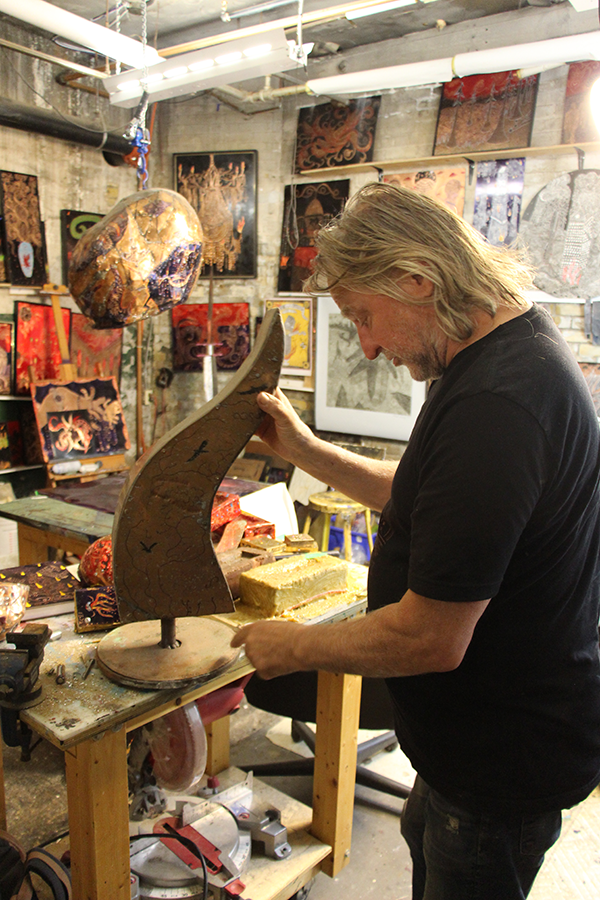
The memorial became a lasting tribute to lives that are too often overlooked. Looking back, what does creating that piece mean to you today?
I am totally honoured.
People come to me all the time about that piece. They write to tell me they’ve visited the sculpture, and I’m thrilled that people go there and find meaning in the work.
Every time I go to SRCHC, there are new names and pieces of memorabilia on it. People leave personal things there, and in this way, the piece lives on — telling a much-needed, heartbreaking story about so many lives lost.
Your work tells powerful stories. What role do you hope art can play in healing, remembrance, and building stronger communities?
I think remembering is very important. Real memory is about healing, and my work has a lot within it about healing and remembering.
We’re all part of a community, and many of us have a relative or loved one who is street-involved. Art can help us remember our past, our childhood, our friends and family, and the people we have lost.
What has this community taught you?
This community has taught me to be humble.
I was challenged all the time when I was working on the sculpture, in many different ways. But we connected through art. It became common ground between us — a way to build trust, connect, and share emotions that might otherwise remain unspoken.
It wasn’t always easy, but seeing the resilience of the human spirit made working on that project worth it.
The theme of SRCHC’s 50th anniversary is “dreaming forward”. When you imagine the next 50 years, what do you hope SRCHC continues to create, protect, or make possible for the communities it serves?
I hope SRCHC receives more funding so it can offer even more social services and have more space, including another building specifically for housing.
Supportive housing and social services are so important. Less and less resources are being put toward social services, and that needs to change.
Right now.