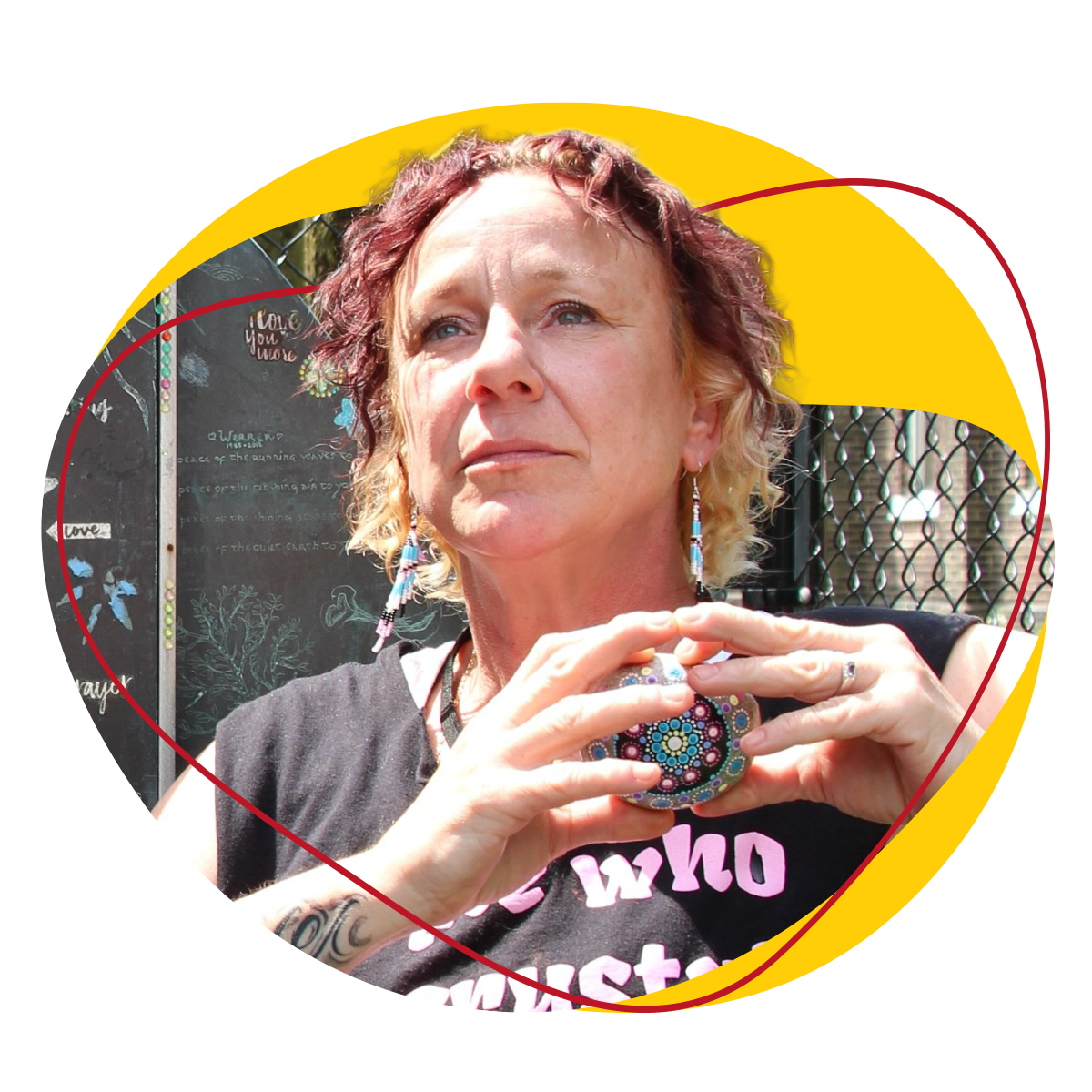
Life began for me at 50. Today, I’m a peer support worker, volunteer, and proud member of the 2SLGBTQ+ community who believes everyone deserves to be seen for who they are — not for where they’ve been.
What led you to first connect with SRCHC, and what stands out to you about that time in your life?
I came to SRCHC when life was really hard. I was using drugs, I didn’t have much structure in my life, and I was carrying around a lot from my childhood. I started using their consumption and treatment services because I didn’t want to use around my animals. Looking back, I realize I was searching for more than health care. I was searching for people who would see me as a human being.
You often say, “Life started for me at 50.” What do you mean by that?
For a long time, I lived other people’s dreams instead of my own. Around 50, I finally started looking in the mirror and saying, “I like you.” Then I learned to say, “I love you.” Now I celebrate the small wins and remind myself that I don’t live my todays in my yesterdays. I’m still growing — and that’s okay.
How has SRCHC supported you along your journey?
SRCHC put a huge hug around me.
They knew I was struggling with addiction, but they never reduced me to that. Through the men’s health program, the Indigenous program, and the people who believed in me, I started believing in myself. One of their motivational speakers said there are people who say, “I can,” people who say, “I will,” and people who say, “I can, I will, and I did.” That stayed with me.
How has your life changed?
Two years after taking peer support training through SRCHC, I became a peer support worker with The Neighbourhood Group. I got to support people who are facing many of the same challenges I once faced.
I’ve also had the opportunity to work with the Dunn House in the west-end, which included my lived experience helping shape a research project on substance use. Seeing my name as a co-author on a published medical journal article was something I never imagined. It showed me that my experiences matter — and they can help make systems better for other people.
I still volunteer with SRCHC whenever I can. Giving back feels like coming full circle.
What does giving back mean to you?
I want people who are struggling to know they aren’t alone. If someone sees me and thinks, “Maybe I can do that too,” then that’s everything. I want to keep showing up, listening without judgment, and reminding people that they have purpose and potential, even if they can’t see it yet.
What does “Dreaming Forward” mean to you?
It means living my own dream — not someone else’s. I want meaningful work, to keep growing, and to keep being there for my community. I also have a dream of seeing the Northern Lights one day, dancing across the sky in all those colours. To me, they remind me to always live in colour.
What is your hope for SRCHC over the next 50 years?
I hope SRCHC keeps doing what it has always done: helping people feel like they belong. I hope more neighbours get involved and come to community events because nice people use substances too. Everyone deserves compassion, health care, and a chance to be themselves. That’s where hope grows.