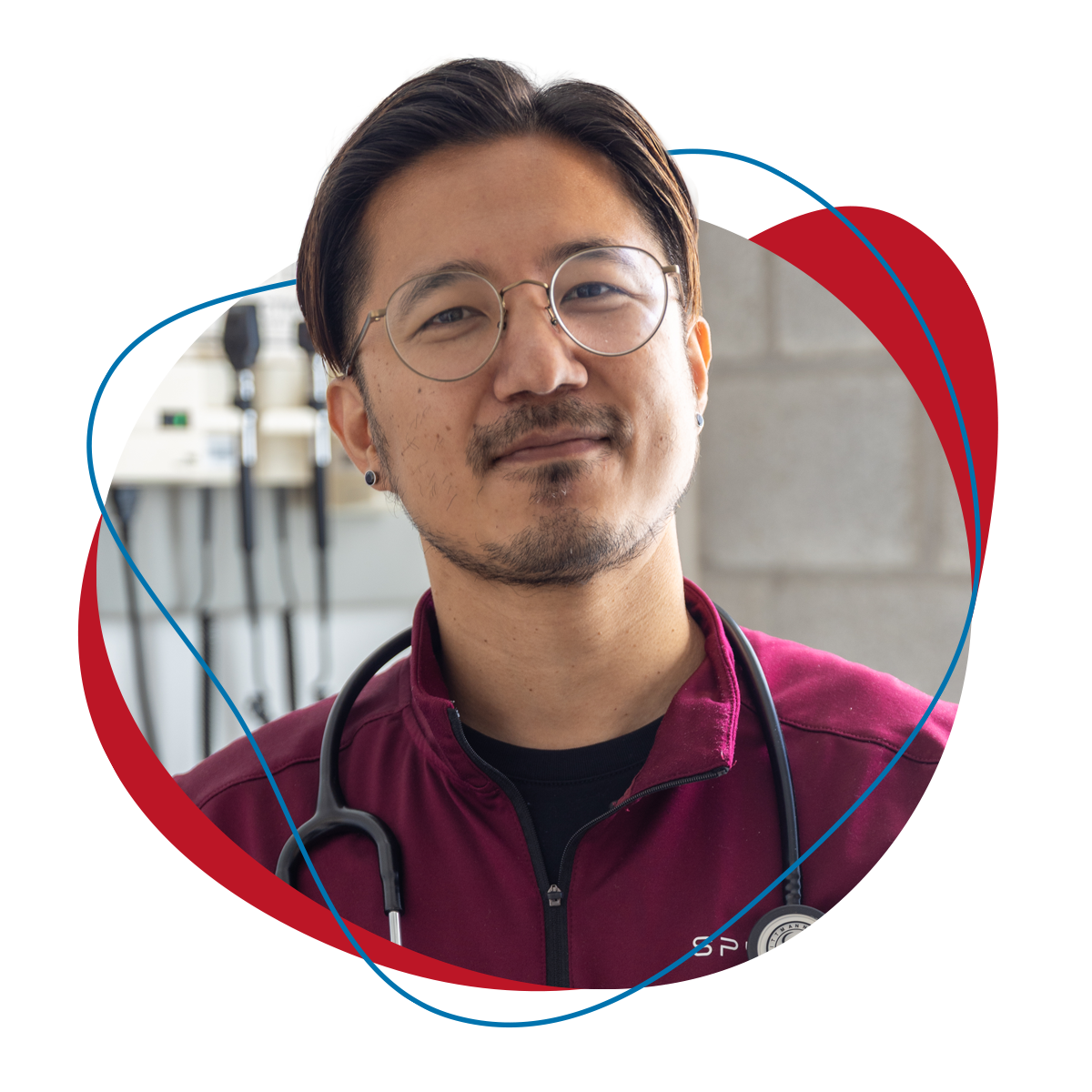
Max Ering, community nurse helping people reconnect with care, community, and possibility.
What first drew you to work at SRCHC and what was it about its approach to care that resonated with you?
To answer this, I have to start with my curiosity about community nursing. It was an area I had never had the opportunity to explore. My previous experiences were primarily in acute care and geriatrics, but I wanted to broaden my knowledge and perspective by working closely with clients in their own communities.
I also grew up in the west end of the city and was curious to learning more about the east end communities and the diverse populations they serve. The opportunity at SRCHC appealed to me because it offered both the chance to experience community nursing and to get to know a new community. And that’s how I came to be here.
Through your work with the Men’s Health Group and Primary Connect, you’ve met people facing complex barriers to care. Can you share a moment or experience that has stayed with you and reminds you why this work matters?
Through my outreach work in the community, I met a client who used to be a chef and loved hiking and biking. After a spinal injury, he lost much of his strength in his lower limbs and often shared how he felt trapped in his own body.
Every time we met, he was in tears as he talked about what he was going through. Those tears weren’t only because of his circumstances, but also because of the relief of finally meeting someone who was there to listen and be fully present in the moment. He could sense that I understood the emotional weight he was carrying.
Listening comes naturally to me, and I think that’s why he trusted me from our very first encounter, when we shared a breakfast at his building. I introduced him to our Men’s Health Group, where he took part in activities such as kitchen support. The group gave him a reason to leave his unit and reconnect, while I continued to support his health care needs.
I recall many more moments, but then it would become a whole book.
One of the hallmarks of community health centres is meeting people where they are. What have the people you serve taught you about resilience, healing, or community?
The people I’ve met through my work are incredibly resilient. Many of them have experienced unimaginable challenges, yet they keep going, often with a smile on their face.
Each person’s story stays with me because I’m an emotional person, but in return, I also carry with me a piece of their resilience. It reminds me why I value this work and why I continue to show up for my clients.
As SRCHC celebrates 50 years of service, what gives you the most hope when you think about the future of community health care for people who have traditionally been left out or underserved?
Programs like Primary Connect give me hope that the gap for people who have been left out or underserved will continue to shrink. Specialized programs like these play an important role in ensuring that every Ontarian has access to, and is connected with, primary care.
In collaboration with our partners — CAMH and Parkdale Queen West Community Health Centre — clients are supported and, when appropriate, transferred between services based on where they live, helping to ensure continuity of care and connection to broader social supports.
Beyond primary care, the many activities and groups offered through SRCHC help create a stronger, broader safety net. They help identify, support, and connect people, who might otherwise fall through the cracks, with the care and support they need.
With continued investment in specialized community-based programs and services, I am optimistic about the future of community health care.
If you and Primary Connect Team could dream forward 50 years, what would you like to see for the communities you serve, and what role do you hope organizations like SRCHC will play in helping make that vision a reality?
I hope that every person in the community is connected to primary care. Many of the health issues that my team and I address are strongly influenced by the social determinants of health. I believe in Maslow’s hierarchy of needs, and I hope that over the next 50 years, everyone’s basic physiological and safety needs will be met. That would improve not only health outcomes, but overall quality of life.
Organizations like SRCHC are an integral part of the community. They’re more than health centres — they are trusted neighbourhood landmarks where people gather, share information and access resources. They often become a first point of contact, not only for health care but also for guidance and connections to other supports that improve overall well-being. That’s why organizations like SRCHC will continue to play a vital role in making that vision a reality.