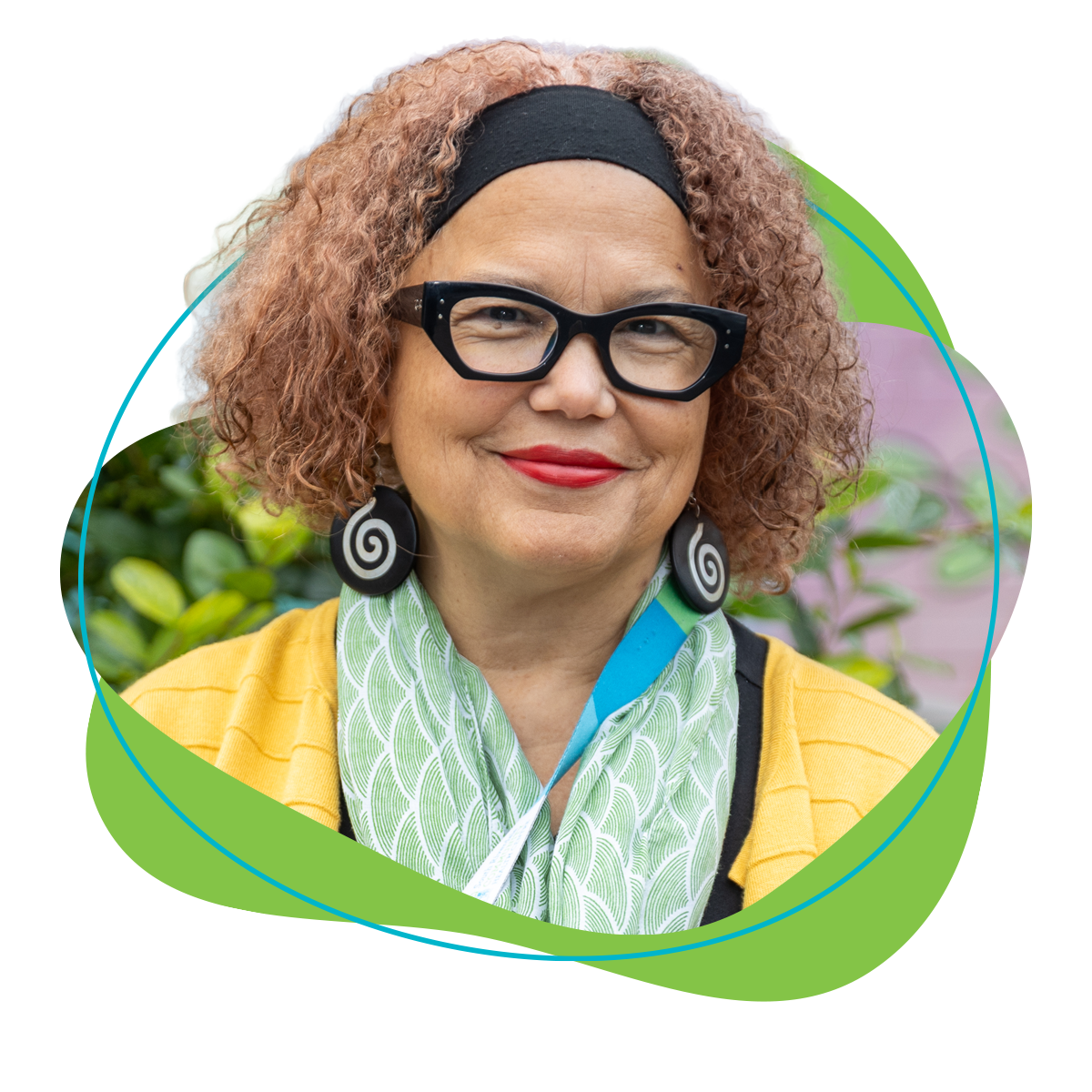
Dr. Ann Phillips (PhD), Director of Community Health and Chronic Disease, South Riverdale Community Health Centre
Advocate for health equity rooted in community, environment, and justice
Can you share a bit about how you came to SRCHC and what inspired your journey here?
My relationship with South Riverdale Community Health Centre began in the 1990s while I was doing my PhD at York University. I met the environmental health promoter here and was deeply inspired by their participatory research with the low-income community at Don Mount Court. It brought together everything I cared about — environment, racism, gender, culture, and health.
After a short contract with Health Canada, I joined SRCHC as an environmental health promoter and researcher. I loved being deeply embedded in community while also teaching and thinking theoretically. Environmental health promotion is foundational to this organization’s history — from addressing lead contamination in the soil to improving indoor air quality in homes and schools. That work shaped me, and it still shapes how I think about health today.
You’re also very involved with SRCHC’s food access program. Tell us about it.
Food is a fundamental determinant of health — and at SRCHC, food access touches everything we do. Early on, health promoters and dietitians ensured programs offered healthy snacks while teaching what healthy eating looked like in practice.
Over time, that grew into rooftop gardens, community kitchens, cooking demos, food boxes, school gardening programs, and now a full community food centre supported by capital investments and kitchen facilitator roles.
Dreaming forward, I imagine a future where everyone who walks through our doors can access nourishing food in ways that feel welcoming, dignified, and connected — to culture, land, and one another. Food is more than just nourishment. It’s about belonging.
What does care mean to you?
Care means seeing the whole person — and the whole context of their life. It’s not just about primary care in the traditional sense. It’s about understanding the social, environmental, cultural, and economic factors that shape health too.
Care is supporting individuals, families, and communities in their own journeys toward health. It’s asking: What do you need to be well — and how can we walk alongside you to get there?
What has SRCHC helped you learn or believe?
This is a place where theory meets practice — and where learning never stops. SRCHC has taught me that improving health means listening deeply, removing barriers, and being willing to change how we work.
We learn by doing. Every week brings new lessons from our clients, community members, partners, and students. Being on the ground helps us understand what equity looks like in action — and how environmental, economic, and social conditions truly shape individuals’ health outcomes.
What do you hope never changes, and what do you hope does?
I hope the care and dedication woven into the fabric of SRCHC never changes. That commitment to supporting people and communities is our essence.
What I hope does change is how we move forward together. I want us to find our stride — working cohesively, using all parts of the organization in coordinated, equitable ways. Dreaming forward means building on our history while finding new ways of being that will carry us into the next 10, 20, 50 years.
And I hope our focus on environmental health returns and grows. In a time of climate crisis, understanding how environment shapes health is more important than ever.