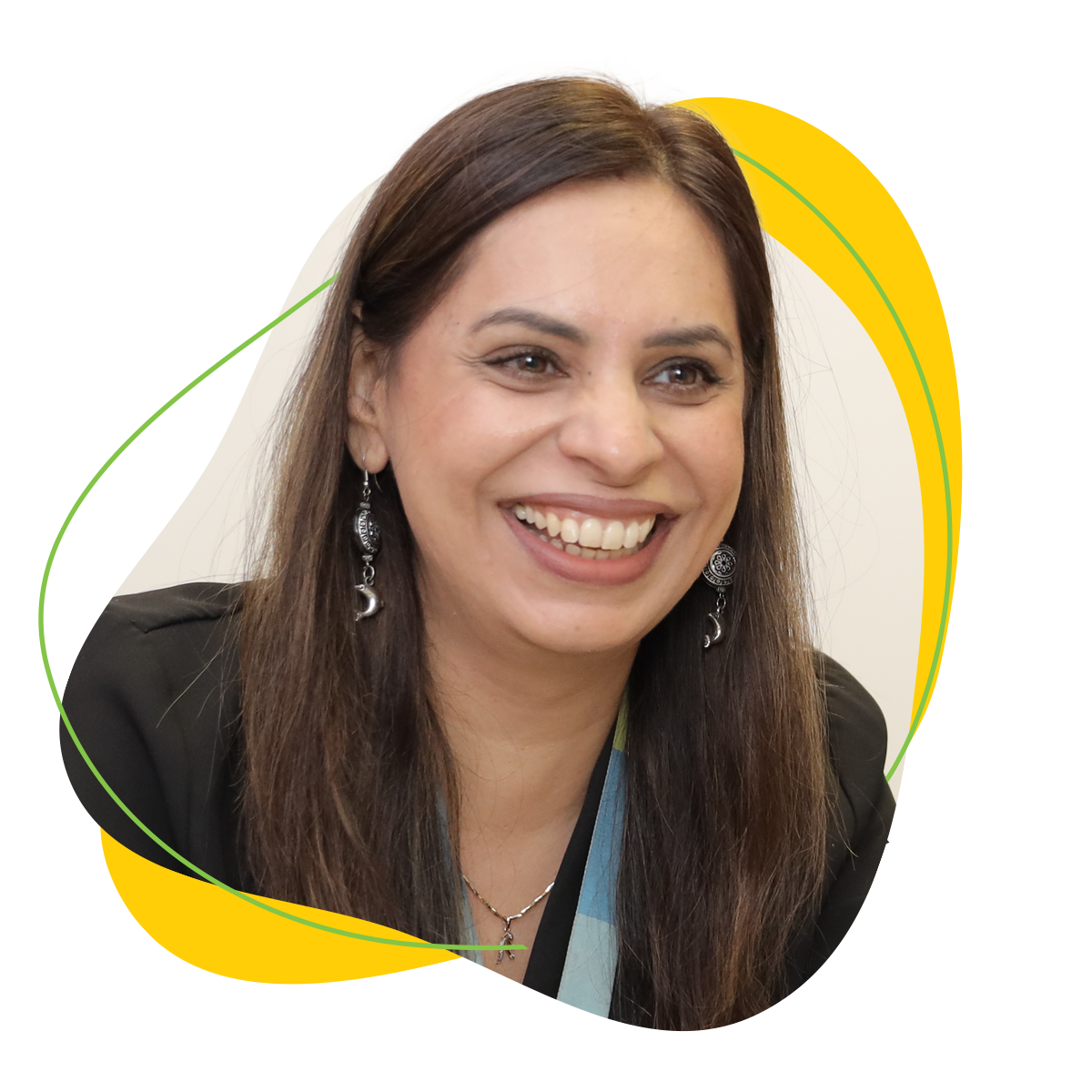
Monica Chopra helps people feel seen, supported, and empowered in their health journeys — meeting them where they are, every step of the way.
A registered dietitian and certified diabetes educator at our Diabetes Education Community Network of East Toronto (DECNET)
What first drew you to this work — and to being part of SRCHC’s community?
I was looking for work close to home that connected with my passion for diabetes education. I was especially drawn to SRCHC because of the opportunity to work more closely with South Asian communities in diabetes management and prevention, where the risk of diabetes is high. As a South Asian immigrant with family members living with diabetes, and having seen firsthand the impact it has on individuals and families, the work felt deeply personal and meaningful to me. SRCHC strengthened my desire to help community members manage their health in ways that are practical and culturally relevant.
How has your understanding of care changed over the years?
I came from a hospital background, where support was often brief and focused on discharge. What stayed with me most were the moments I spent out in the community, building relationships. At SRCHC, I’ve been able to walk alongside people for the long term — helping them navigate barriers, build confidence, and feel supported throughout their journey.
What does compassionate, person-centred diabetes care look like to you?
People should feel respected and supported without judgment. Diabetes may not be someone’s only concern — they may also be managing stress, caregiving responsibilities, housing or food insecurity, or trauma. Care moves beyond simply giving blood sugar or nutrition advice and instead focuses on understanding a person as a whole: their real-life challenges, culture, traditions, and priorities. Compassionate care is not about expecting perfection; it is about supporting people where they are and helping them identify small, achievable changes. It has to reflect real life, not just clinical targets like glucose levels.
Can you share a moment that has stayed with you?
One client I worked with for nearly eight years was referred through our safe injection site. He was living with significant trauma, housing insecurity, and food insecurity. I helped him find a family physician, connected him to one of our social workers for housing support, and continued supporting him with diabetes education and food resources such as where to find free meals and grocery gift cards during the pandemic. Through this broader circle of care, he was able to secure stable housing, cook his own meals, better manage his blood sugar, see a doctor regularly, and get his eyes screened. Over time, his overall diabetes management improved. That journey meant a great deal to me.
What do you hope health care systems better understand about diabetes education?
You cannot effectively manage a chronic condition without addressing the realities people face every day. Many of my clients are struggling with food insecurity, unstable housing, or limited access to transportation and childcare. Sometimes what helps most is not advice, but practical support in the moment — like helping ensure there is actually food on the table.
If you could redesign nutrition and diabetes education for marginalized communities, what would it look like?
I would bring care into the spaces where people already feel safe and connected — schools, faith spaces, their community housing, newcomer programs. Flexible scheduling, outreach, and continuing virtual care can also make a huge difference. We need to stop expecting people to fit perfectly into the health care system and instead design care around their real lives.
Whose voices should be at the centre of that future?
The voices of people living the experience themselves. They understand the barriers better than anyone — whether that’s culture, language, trauma, food insecurity, or the challenges of navigating care. Their experiences should shape how services are designed and delivered.
As you imagine the next generation of clients, what shift do you hope your work contributes to?
I hope we continue moving toward care that is more compassionate, equitable, relationship-based, and culturally supportive. I want people to feel like they belong in the health care system — not judged by it.
Looking ahead, what are you dreaming forward toward?
I dream of a health care system focused less on perfection and more on empowerment and partnership. Better health outcomes matter, but so does trust, dignity, and quality of life. I hope we continue expanding trauma-informed care, mental health supports, and pathways that make health care more accessible and equitable for everyone.