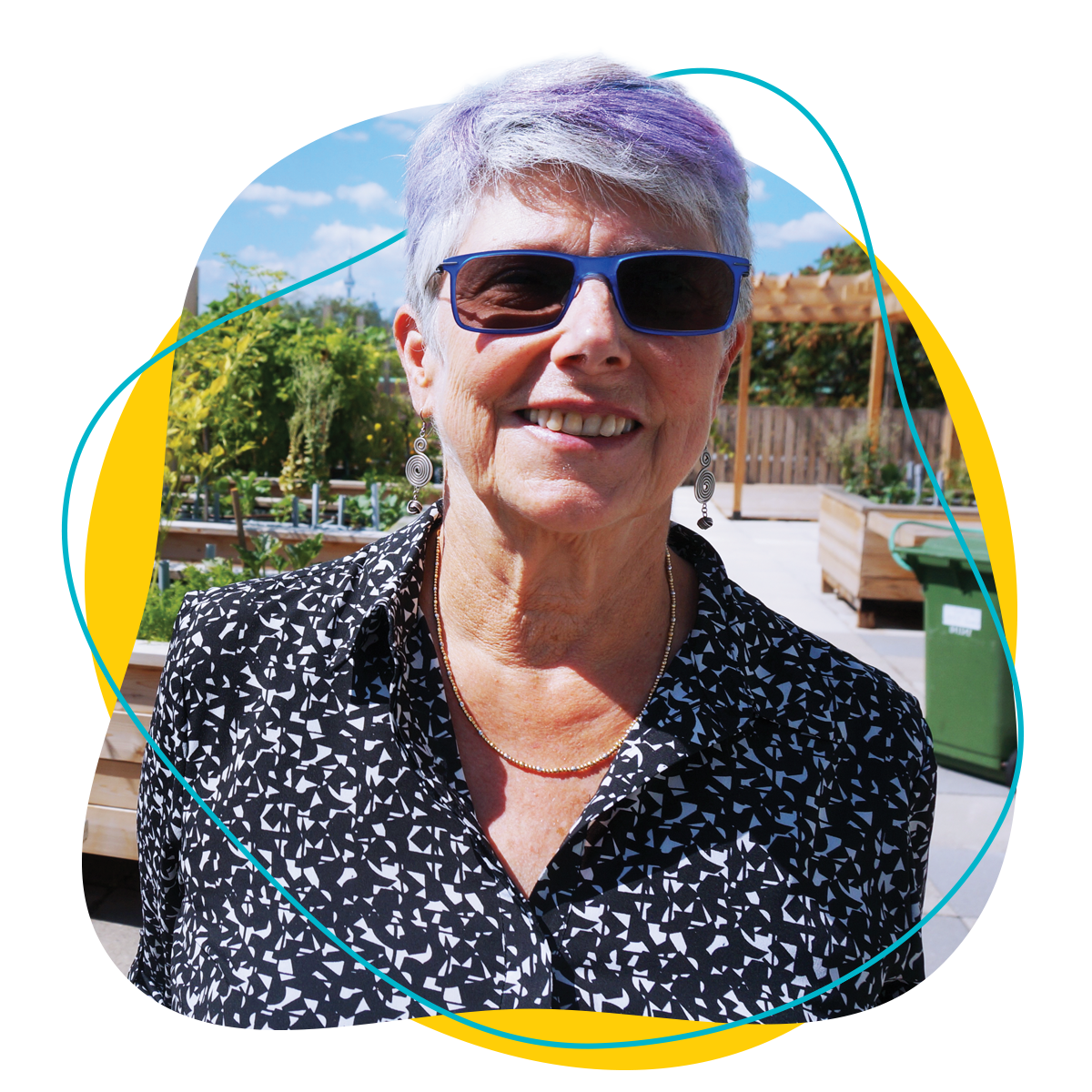
SRCHC’s first patient, a lifelong patient, and dedicated community member
How did you first come to SRCHC?
I had just returned from travelling abroad, and my health coverage had lapsed. Living in South Riverdale and with very little money, I had a health concern but didn’t know where to turn. A friend suggested I visit SRCHC, which had just opened. I became their very first patient — walking into their not-yet-renovated space in an old police station.
From the very first visit, they were kind, welcoming, and made care feel easy to access. I felt so supported that I decided to stay as a patient, and I’m still part of the SRCHC community today.
Over the years, what has kept you connected to SRCHC?
I love that SRCHC is rooted in the neighbourhood. I joined their first women’s health committee, and we explored topics like women’s drug use, reproductive rights, and community education. We held workshops and public film screenings. Being part of that work deepened my connection and inspired me to do more.
How did your role evolve?
The committee encouraged me to stand for election to the Board as a representative, and I agreed. I got involved in outreach, helped produce neighbourhood health newspapers, and planned orientations for new Board members. Through this work, I saw firsthand how a successful grassroots organization operates, how it truly engages the community, and how a dedicated team can provide compassionate care that makes a real difference in people’s lives. Being part of that journey has been inspiring and deeply meaningful. That experience helped to shape my eventual career in community health.
A moment that stands out
When I had a dreadful cough along with other vague symptoms, SRCHC really listened and took it seriously. They ordered tests and discovered I had a rare, life-threatening infection. They moved quickly to get me into the hospital and supported me through my recovery. Without that initial care, I might not have recovered.
Looking ahead
My hope is that SRCHC stays deeply rooted in this diverse community. Many local people face complex challenges of differing sorts. If SRCHC is able to remain inclusive and welcoming, caring for the whole person, not just the illness, it will continue to build a strong, healthy community for the next 50 years.