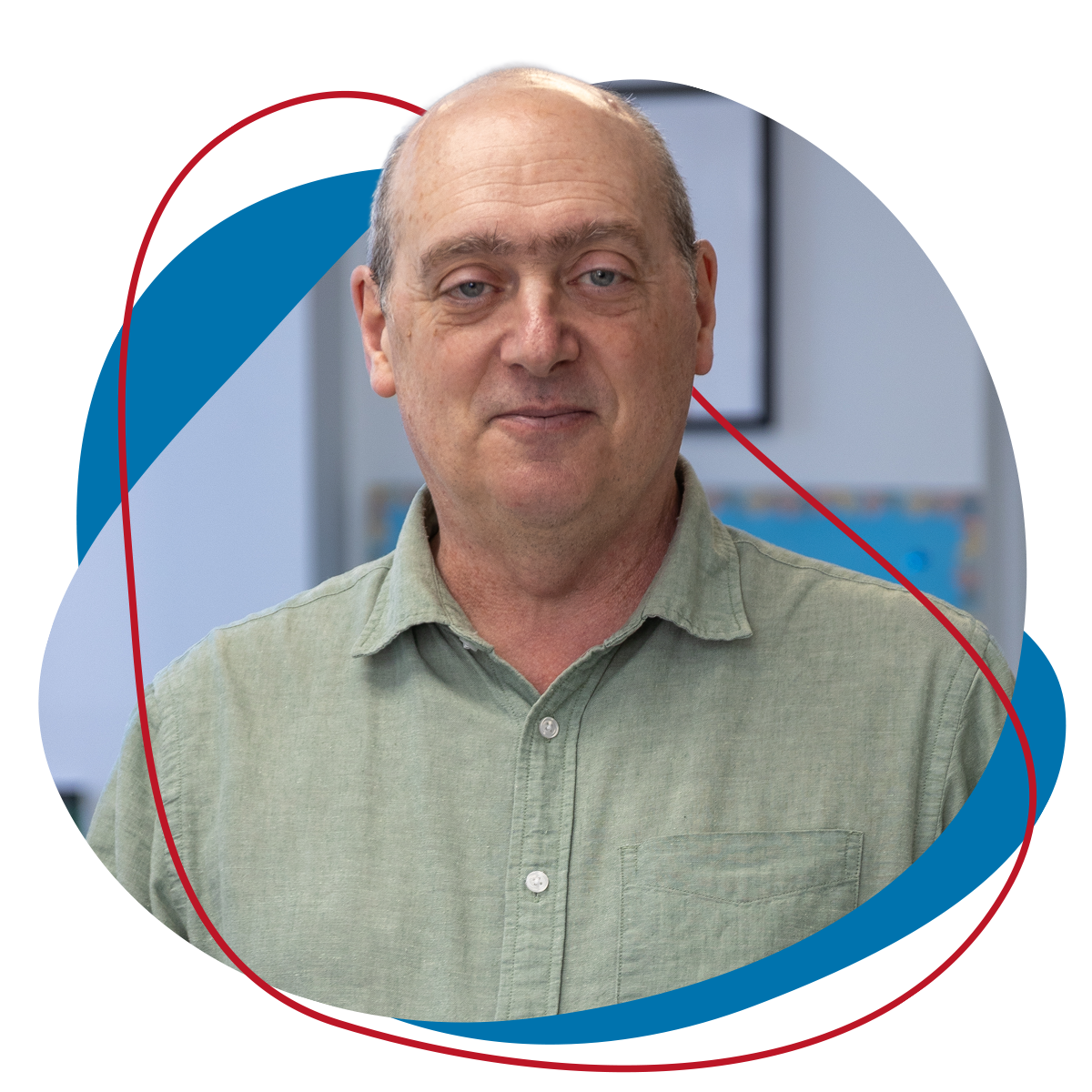
Executive Director of St. Michael’s Homes and Co-Lead of the East Toronto HART Hub
Working at the forefront of substance use care and support, community mental health, and housing
Looking back, what first drew you to working with community health centres like South Riverdale Tell me about yourself. Was there a moment that crystallized your commitment to mental health and substance-use support?
I got here accidentally. I was a PhD student at the University of Toronto who needed a job and ended up working in a halfway house for men coming out of federal prisons. It was a good experience.
Later, I took a short-term role as a voluntary trustee case manager supporting people with significant substance use and mental health issues to manage their money. I thought it would last a couple of months. It turned out to be the most meaningful work I’d ever done — and I’ve never left the sector.
What made that work so meaningful?
The level of vulnerability. Many people had been homeless for 10 or 15 years. Some were living with psychosis, severe developmental delays, and substance use challenges.
We weren’t just doing office tasks — we were helping people stay housed, de-escalating crises, serving meals. Everything we did mattered in a very immediate way. Without that kind of care and energy, nothing good was going to happen in their lives.
Is there a moment that has stayed with you?
I remember a musician who struggled with substance use and deep anxiety. He would buy and sell his instrument repeatedly to pay for drugs and food.
Staff worked with him to plan — how much money to set aside, how long it would take to keep the instrument. Who does that for someone? That kind of practical, patient support helped him regain control. People often think they’re giving up control when they accept help. In reality, they’re taking it back.
What stood out to you about SRCHC as a partner on the HART Hub?
I first connected with SRCHC more than 20 years ago as a graduate student, interviewing drug users about harm reduction. What struck me then — and still does — is SRCHC’s commitment to meeting people where they are.
When we set up a hub in Oakridge and the pandemic hit, many partners shut down. SRCHC stayed. They had the equipment, the staff, and the will to keep going. For months, it was their team and our case manager holding things together.
That told me everything I needed to know.
What makes SRCHC’s approach unique?
When HART Hub funding was released, you really saw who your partners were.
SRCHC focused on what we could build together.
They were clear about their strengths — primary care, nursing, outreach — and equally clear where others could lead. That collaborative instinct is rare. They ask, “How do we serve this community best?” not “How do we grow our silo?”
What excites you most about the East Toronto HART Hub?
Nine years ago, a ministry official asked me how many more treatment beds we needed. I said I wasn’t sure we needed more beds — we needed an outpatient team that could be the home for people’s care.
The East Toronto HART Hub is that home. It’s a place people can turn to and return to, whether they’re stable and just checking in or things have gone wobbly after a few good years.
It’s a community anchor — treatment, primary care, housing — because housing is health care — and more. You don’t have to start over every time you struggle.
In five years, what would success look like?
No waitlists. Sustainable base funding. Fully integrated teams across our sites.
Ultimately, success means every HART Hub making substance use care and supportive housing more accessible. People can come to us when they’re ready to take a different path — and we’ll guide them and connect them to the services they need.
What does SRCHC’s milestone — 50 years and Dreaming Forward — mean to you personally?
The pandemic proved the power of partnership.
When COVID hit, we stayed open. We supported our partners. We also learned who we could depend on.
Those relationships — between St. Michael’s Homes, SRCHC, and others — are built on trust, not competition. Not money-grabbing. Real partnership.
I’ve learned you can’t do this work alone. There’s no single organization that can provide 100% wraparound care. Our clients are the same people. Working together is the only way forward.
And I have to say — SRCHC’s team is fantastic. I’m thrilled to work with them. They’re a great partner, and they provide excellent care.
Dreaming forward, for me, means deepening that collective power. Because when we work together, we accomplish extraordinary things.