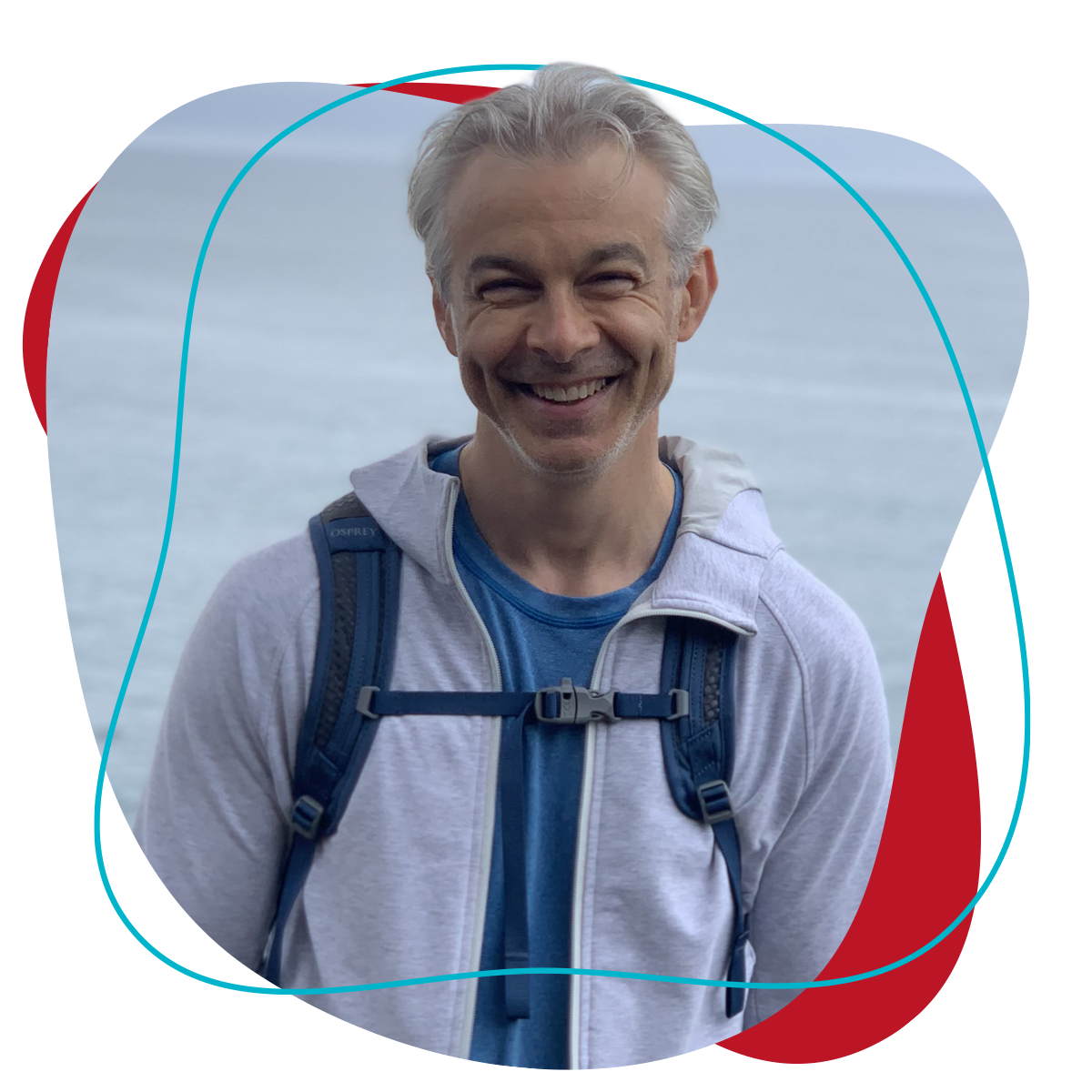
Medical Director of Infection Prevention and Control at Michael Garron Hospital and the Toronto Hep C Program, and Medical Lead for the East Toronto Health Partners
Infectious disease specialist
Looking back, what first drew you to working with community health centres like South Riverdale Community Health Centre and with vulnerable populations?
As an infectious disease physician, you’re inevitably drawn to vulnerability. Infectious diseases disproportionately affect people who are marginalized — people who use drugs, people who are under-housed, people who for various reasons did not have consistent access to care.
When I began treating Hepatitis C, I quickly realized that clinical expertise alone wasn’t enough. People wouldn’t connect with me in a hospital office. Care had to be rooted in trust and community.
That realization led me to SRCHC — and ultimately to co-founding the Toronto Community Hep C Program.
How have the needs of the communities served by SRCHC evolved — and how has primary care had to adapt?
The toxic drug supply has dramatically shifted the landscape. Complexity has increased —more co-occurring conditions, more instability in housing, more mental health challenges.
Primary care for people who use drugs is not the same as primary care for those who don’t. It requires flexibility, harm reduction, cultural safety, and integration with social supports.
We also deepened consultation with First Nations, Métis, and Inuit partners, ensuring Indigenous voices were incorporated into program delivery. The evolution has always followed the same principle: listen first, then adapt.
Through East Toronto Health Partners, you’ve helped shape the HART Hub. What excites you most about this model?
The East Toronto HART Hub embeds highly specialized primary care within a broader ecosystem —housing support, mental health, harm reduction, and social services — all in one place.
SRCHC was already practicing this model. The Hub expands it.
We now have 15 partners — including St. Michael’s Homes, Indigenous-led organizations, and others — bringing unique expertise into a shared space. Funding in health care is often siloed, which makes transitions hard. This model allows us to move clients seamlessly between services and meet them exactly where they are.
That’s transformative.
What makes this integration so important?
Housing is health care. Stability is health care.
For people who use drugs, health outcomes are inseparable from where they sleep, how they eat, and whether they feel safe. By weaving housing and social supports directly into care, we address root causes — not just symptoms.
The Hub creates a space where no one is told, “That’s not our department.” Instead, we collectively ask, “What do you need — and how do we get you there?”
During COVID-19, you worked closely with SRCHC. What stands out from that time?
It was the worst and best of times. There was tragedy — and extraordinary collaboration.
SRCHC had an unusual response. Instead of saying, “Here’s what we need,” they asked, “What do you need — and how do we build it together?” That mindset allowed us to quickly address an enormous gap and provide COVID-related support to people in shelters, people using drugs, and people who were under-housed.
We worked hard on vaccination. I still remember one of our team members riding her motorbike between shelters to vaccinate people — we called her “Spikes on a Bike.”
That spirit of adaptability was remarkable.
What lessons from that period should carry forward?
Listen to the community. Then evolve.
We did it with the Hep C Program. We did it during COVID. We’re doing it again with the East Toronto HART Hub.
Health care systems can be rigid. Community partnerships allow elasticity. When things inevitably change you need organizations who really understand their community, who are willing to pivot — to innovate in real time.
That requires courage.
Innovation can be controversial. What would you say to SRCHC at this 50-year milestone — Dreaming Forward?
It’s hard to do your work at the leading edge. Innovation invites scrutiny. But that’s where change happens.
SRCHC has consistently pushed forward — sometimes into uncomfortable territory — to meet the needs of its community. I hope they continue to embrace that philosophy: listen deeply, reflect honestly, and keep pushing against the forces that resist change.
The recent public announcement to cut Consumption and Treatment Services funding reminds us that forward progress is not always linear or dictated by sound evidence. Progress requires strategic focus and persistence even in the face of obstacles or misguided funding decisions. SRCHC has demonstrated both.
How does this work connect to the broader vision of East Toronto Health Partners?
Our Ontario Health Team is the mechanism for delivering integrated care across the east end. SRCHC was at the table from the beginning.
What I value is that SRCHC understands it is one part of a complex system. They act with reciprocity. They invest in system solutions — even when that means sharing or reallocating their own resources.
Oakridge Harm Reduction Hub began with no dedicated funding. It exists because partners, including SRCHC, put their own dollars on the table to meet a clear need.
That is system leadership.
What gives you hope as you look ahead?
We are now collaborating on integrated chronic disease management. We are expanding the HART Hub model. We are strengthening Indigenous partnerships.
What gives me hope is not any single program. It’s the pattern: listen to the community, understand their experience, identify a gap, gather partners, innovate, evaluate, evolve together as an integrated system.
Dreaming forward means continuing to do that work — together.
And in East Toronto, we’ve shown that when organizations like SRCHC commit to being both innovators and true system players, we can accomplish amazing things.